
Three Pillars: Regulatory Strategy
Regulatory Strategy Is Not the Last Step. It's the First.
Most biological companies treat regulatory strategy like a finish line.
Build the product.
Run the trials.
Register it.
Launch.
But I’m going to argue that regulatory strategy is not a box you check after the science is done. It is a competitive advantage that most companies leave on the table because they picked it up too late.
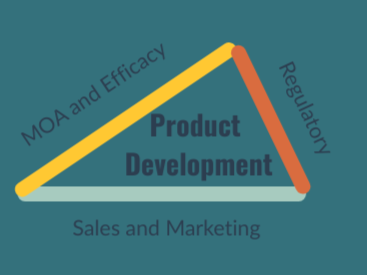
The Stool With One Short Leg
If you've read The Three Pillars Every Ag-Bio Product Needs to Succeed, you know the framework. Science, regulatory, and commercial have to work together from the beginning.
Now instead of a triangle, think of those three pillars as legs on a three-legged stool. When all three are the same length, the stool is stable. The product scales. Everything works the way it should.
But when one leg is shorter than the others, the stool wobbles. It still functions. You can still sit on it. But it's annoying, it's inefficient, and if you don't fix it, it gets worse over time.
Regulatory is a tricky pillar because most companies look at it in black and white terms. But it’s most often grey and a bit fuzzy. Companies either register their products correctly, or make a conscious decision to take a few risks on how and where they register.
But I rarely, if ever, see a company create a regulatory strategy early on and use it as a competitive advantage.
Lucky Ignorance Is Not a Strategy
A founder told me something recently that stopped me mid-scroll.
They said that if they had understood the regulatory requirements before designing their biological, they probably would have formulated it differently. And they weren't sure it would have worked as well.
Their ignorance of the regulatory landscape accidentally led them to a better product.
That is a remarkable story. I also think it was the incorrect conclusion from what happened. People view regulatory as a set of constraints. Which is dumb. You can both understand the regulatory landscape and choose to do something different. But I also expect that they would have actually made an even better product if they would have known what they had to work within.
Most of the time, not knowing the regulatory landscape early doesn't create unexpected benefits. It creates expensive problems. Reformulations. Wasted trials. Claims you can't substantiate. Registration paths that close doors instead of opening them.
Don't build a strategy around lucky ignorance. There is more grey area than you think; so use that to be creative.
What Regulatory Strategy Actually Means
Registration is the outcome. Strategy is everything that happens before it.
It starts with knowing your launch intersection.
Where do you want to sell first?
What states have the data to support it?
Are you registering as a standalone product or as an ingredient for another company's formulation?
Then you want to loosely think of where you want to be in 5 years.
Do you want to sell in California eventually? You need to understand what California requires before you design your trials, not after. Want to avoid California altogether? Fine. Then don't let it take up any space in your planning. But know that decision is made on purpose, not by accident.
The boundaries of your registration strategy should be shaping your science from day one otherwise it could shut doors you didn’t even know existed.
What You Can Say Matters as Much as What You Can Prove
Here is the part that catches companies off guard.
You can have ironclad efficacy data and still get into trouble for what your marketing department puts on a product page.
What your marketing team publishes is as binding as what is printed on your label. If your social media, your sell sheets, or your website make claims that your registration doesn't support, you are exposed. Someone can ask you to substantiate those claims at any time.
This is not a reason to say less. It is a reason to design experiments that support what you actually want to say. You don’t want to be in a position where you are mining your science for things to say. You want to DESIGN your experiments so that you can eventually say what you want to say.
Know what you want to lean into. Build the science that backs it up. Then let marketing tell that story inside the boundaries of what you can defend.
Push the limits a little. This industry moves forward because people push. But do it responsibly and do it with full knowledge of where that line is.
Regulatory Strategy and the Big Picture
If your goal is to eventually partner with a multinational, get acquired, or be someone else's ingredient, your regulatory story is one of the first things they will look at.
They want to know your registration path is clean. They want to know you understand the landscape. They want to know your science is designed to support your claims, not contradict them and definitely not cause problem for them down the road.
A messy regulatory history doesn't just slow you down internally. It makes you a harder asset to evaluate externally.
Your regulatory strategy is not just about getting a product to market. It is about what that product is worth once it gets there.
Where to Start
Know your launch intersection before you do anything else. The Launch Intersection Tool is a resource I built specifically for this — it helps you identify where you have the highest likelihood of launch success. Then from there, you can start gathering information on the regulatory landscape. Now I do want to make a disclaimer here. This blog targets products that need to be registered state by state. This intentionally ignores products that need to be registered at the Federal level like pesticides.
The regulatory landscape is not the enemy. It is the playing field. Know the rules before you take the field, and you have a competitive advantage over almost everyone else in this industry who is still figuring it out after the fact.
Not sure where your regulatory leg stands? That is exactly what the Three Pillar Audit is designed to find out. Let's talk.
